
What Is Sales Automation? A Data-First Approach to Scaling Revenue
Sales teams today must balance meaningful conversations with prospects while handling a growing list of repetitive tasks. Logging calls, updating CRM records, researching prospects, and sending follow-up emails can consume a significant portion of a salesperson’s time.
Sales automation helps solve this challenge by streamlining repetitive processes and enabling teams to focus on revenue-generating activities. By automating routine tasks and organizing data more effectively, businesses can improve productivity, accelerate sales cycles, and scale their growth more efficiently.
In this guide, we explore what sales automation is, how it works, and why a data-first approach is critical for success.
What Is Sales Automation?
Sales automation refers to technology that automatically handles repetitive tasks within the sales process. These tasks may include:
- Logging calls and activities
- Sending follow-up emails
- Updating customer relationship management (CRM) records
- Researching prospects
- Scoring and prioritizing leads
Instead of completing these tasks manually, sales automation systems use rules, triggers, workflows, and artificial intelligence to perform them automatically.
The result is a more efficient sales process where representatives spend less time on administrative work and more time building relationships with prospects and customers.
Sales Automation vs. CRM
Sales automation and CRM systems are often used together, but they serve different purposes.
A CRM system stores and organizes customer data, tracks deal stages, and records interactions. It acts as the central database for customer relationships.
Sales automation works as the execution layer, using that stored data to trigger workflows and automate tasks.
Feature Comparison: CRM vs. Sales Automation
-
Core Function
-
CRM: Stores customer and prospect data
-
Sales Automation: Automates workflows and actions
-
-
Activity Tracking
-
CRM: Records interactions and deal stages
-
Sales Automation: Initiates tasks and outreach automatically
-
-
Output
-
CRM: Reporting, dashboards, and pipeline tracking
-
Sales Automation: Automated emails, reminders, and task creation
-
While CRM platforms manage information, sales automation tools use that information to execute sales activities more efficiently.
Sales Automation vs. Marketing Automation
Sales automation and marketing automation are closely related but focus on different parts of the customer journey.
Marketing automation typically handles:
- Lead generation campaigns
- Content distribution
- Lead nurturing
- Lead scoring
Sales automation focuses on:
- Direct prospect outreach
- Lead follow-ups
- Deal management
- Sales task automation
The two systems intersect during the lead handoff stage, when marketing-qualified leads are transferred to the sales team for direct engagement.
When these systems share data and definitions, leads move through the funnel faster and more efficiently.
How Sales Automation Works
Sales automation systems operate through three main components:
- Data capture and enrichment
- Signal detection and workflow triggers
- AI-assisted task execution
Together, these elements create a streamlined system that responds to customer behavior and supports the sales team with timely actions.
Data Capture, Enrichment, and Synchronization
Automation begins with collecting and organizing accurate data.
Sales systems capture interactions such as:
- Website visits
- Email engagement
- Form submissions
- Meeting attendance
Additional data may also be added to provide context, including:
- Company size
- Industry classification
- Geographic location
- Technology usage
Key data types that support effective automation include:
Contact Data
- Email addresses
- Phone numbers
- Job titles
Company Data
- Organization size
- Industry sector
- Revenue range
Intent Signals
- Website browsing behavior
- Content downloads
- Topic research activity
Engagement History
- Email responses
- Calls and meetings
- Past interactions with sales teams
The accuracy and completeness of this data directly impact the effectiveness of automation workflows.
Analysis and Trigger-Based Actions
Once data is collected, automation systems analyze behavior and signals to determine when actions should occur.
Examples of triggers may include:
- A prospect visiting a pricing page
- Multiple email opens within a short period
- A prospect downloading multiple pieces of content
- Changes in company leadership or hiring activity
When triggers are activated, automation systems can automatically perform actions such as:
- Assigning the lead to a sales representative
- Sending a follow-up email
- Adding the contact to an outreach sequence
- Scheduling reminders for further engagement
This ensures timely responses and consistent engagement with prospects.
AI-Assisted Research and Content Support
Modern sales automation platforms often incorporate artificial intelligence to help sales teams work more efficiently.
AI tools can assist with:
- Account research
- Identifying potential decision-makers
- Summarizing meetings or calls
- Drafting outreach messages
- Suggesting next steps in the sales process
Rather than replacing human interaction, AI serves as an assistant that accelerates preparation and improves productivity.
Sales representatives still review and personalize communication to ensure relevance and authenticity.
Benefits of Sales Automation
Sales automation provides several advantages for organizations looking to improve efficiency and scale revenue.
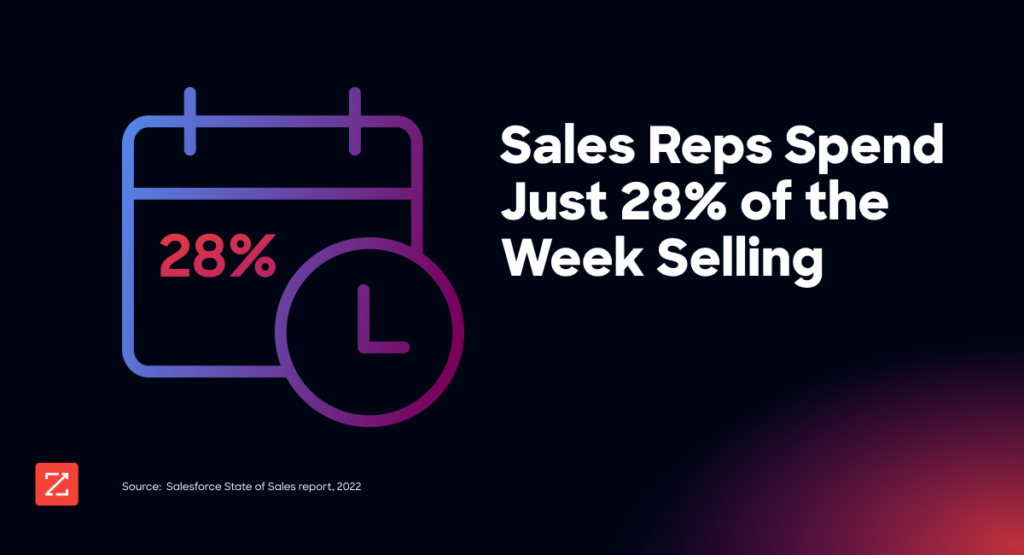
More Time for Selling
Sales representatives often spend a large portion of their time on administrative work rather than selling.
Automation reduces tasks such as:
- Manual data entry
- Tracking follow-ups
- Scheduling reminders
- Basic prospect research
This allows sales teams to dedicate more time to meaningful conversations with prospects.
Improved Data Accuracy
Automation reduces human errors that can occur during manual data entry.
Benefits include:
- Reduced duplicate records
- More complete customer profiles
- Improved data consistency across systems
Accurate data leads to better reporting, forecasting, and decision-making.
Faster and More Consistent Customer Experiences
Prompt responses are critical in modern sales environments.
Automation ensures prospects receive timely follow-ups and relevant information when they engage with your business.
Consistent engagement improves:
- Response rates
- Conversion rates
- Customer satisfaction
Sales Automation Across the Sales Funnel
Sales automation can support multiple stages of the sales process.
Automated Prospecting and List Building
Automation tools can identify potential prospects based on defined criteria such as:
- Industry
- Company size
- Geographic region
- Behavioral signals
This allows sales teams to continuously discover new opportunities without manual research.
Lead Scoring and Routing
Not all leads have the same likelihood of converting.
Sales automation systems evaluate leads based on:
- Company fit
- Engagement level
- Buying signals
Leads with higher scores can be automatically routed to the appropriate sales representatives for follow-up.
Outreach Sequences and Follow-Up
Automation enables multi-step outreach campaigns across multiple channels.
A typical sequence might include:
- Day 1: Introductory email
- Day 3: Phone call attempt
- Day 5: Social media connection request
- Day 7: Follow-up email
These structured sequences ensure prospects are consistently engaged without requiring manual scheduling.
Pipeline Management and Forecasting
Sales automation can also support pipeline visibility and forecasting.
Automation systems track deal activity and identify potential risks such as stalled opportunities or lack of engagement.
Historical data can also be used to estimate:
- Expected close rates
- Revenue forecasts
- Pipeline performance
Types of Sales Automation Tools
Sales automation solutions typically fall into several categories.
CRM Systems
CRM platforms store and manage customer data while tracking deal progress and interactions.
Sales Engagement Platforms
Sales engagement tools coordinate outreach activities, including email campaigns, follow-up sequences, and performance analytics.
Conversation Intelligence Platforms
Conversation intelligence tools analyze calls and meetings to identify insights, coaching opportunities, and potential deal risks.
Sales Intelligence Platforms
Sales intelligence tools provide data that supports prospecting and targeting, such as contact details, company information, and behavioral insights.
The Role of AI in Modern Sales Automation
Artificial intelligence is transforming sales automation by enabling systems to move beyond simple rule-based workflows.
AI can analyze patterns within historical data to recommend actions such as:
- Which accounts to prioritize
- When to contact prospects
- Which messaging strategies are most effective
AI can also generate outreach drafts, summarize conversations, and highlight important account insights.
However, human review remains essential to maintain personalization and build genuine relationships with prospects.
How to Implement Sales Automation
Organizations typically follow three steps when implementing sales automation.
Audit Your Current Sales Process
Start by identifying repetitive tasks and bottlenecks in your existing sales workflow.
Also evaluate the quality of your current data, including:
- Missing contact information
- Duplicate records
- Outdated company details
Automation works best when the underlying data is accurate and complete.
Build an Integrated Technology Stack
Choose automation tools that integrate well with existing systems and share data efficiently.
An effective stack typically includes:
- A data foundation
- A CRM platform
- Outreach and engagement tools
- Analytics or intelligence systems
Integration between tools helps prevent data silos and improves overall workflow efficiency.
Train Teams and Measure Performance
Adoption is critical to the success of any automation initiative.
Organizations should provide training, support change management efforts, and track performance metrics such as:
- Sales activity levels
- Response and meeting rates
- Pipeline velocity
- Data accuracy
Monitoring these metrics helps teams continuously refine their automation strategy.
Why Data Quality Is the Foundation of Sales Automation
Sales automation amplifies the data that powers it.
Poor-quality data can lead to:
- Emails sent to outdated contacts
- Messages reaching the wrong decision-makers
- Missed opportunities with qualified prospects
Maintaining accurate data through continuous updates and verification ensures automation systems operate effectively.
Reliable data helps ensure the right message reaches the right prospect at the right time.
The Future of Sales Automation
Sales automation continues to evolve alongside advances in artificial intelligence and data analytics.
Emerging trends include:
- Smarter AI-driven insights
- More personalized outreach at scale
- Improved predictive analytics for sales forecasting
As these technologies mature, sales teams will spend even less time on administrative work and more time building relationships and closing deals.
Final Thoughts
Sales automation has become an essential component of modern revenue operations.
By automating repetitive tasks, improving data accuracy, and supporting faster decision-making, organizations can create a more efficient and scalable sales process.
Companies that adopt a data-first approach to sales automation are better positioned to respond quickly to buyer signals, engage prospects effectively, and drive consistent revenue growth.
FAQs
1. What is sales automation?
Sales automation refers to technology that automates repetitive tasks within the sales process, such as sending follow-up emails, updating CRM records, scoring leads, and tracking sales activities.
2. How does sales automation help sales teams?
Sales automation reduces manual work, improves efficiency, and allows sales representatives to spend more time engaging with prospects and closing deals.
3. What tasks can be automated in sales?
Common automated tasks include lead scoring, follow-up emails, data entry, prospect research, activity tracking, pipeline updates, and outreach sequences.
4. Is sales automation the same as CRM?
No. A CRM stores and manages customer data, while sales automation tools execute workflows and automate actions based on that data.
5. Why is data important for sales automation?
Sales automation relies on accurate data to function effectively. High-quality data ensures that outreach reaches the right prospects, improves targeting, and prevents errors like duplicate records or outdated contact information.
____________________________________________________________
This article was written by ZoomInfo and originally published here.
Author
